
Introducing Shofang
When my partner-in-Chinese-wine, Francesco, showed me Shofang wines for the first time, admittedly I wasn’t convinced. I had a laundry list of wineries I wanted to work with at that point and wasn’t looking to add another. But when I got dragged out for a midnight dinner just an hour after landing in Shanghai to San Bai Bei, a late-night spot specialising in Ningbo’s hallmark stinky dishes, I grabbed onto the one thing I recognised and found comfort in - Shofang’s Pear Cider.
In the same week I met Shofang’s husband Levi Lee. Admittedly, I tried to gloss over talks about the wines, but then Levi mentioned the very thing I had been looking for: “A fortified with our old vine Muscat Hamburg.”
Levi dropped off samples that very afternoon. I packed them in my suitcase and left China the next day. I couldn’t believe I had previously glanced over something so exciting - with such variety in their cuvées and an affordability that was near impossible to find in the Chinese wine world.
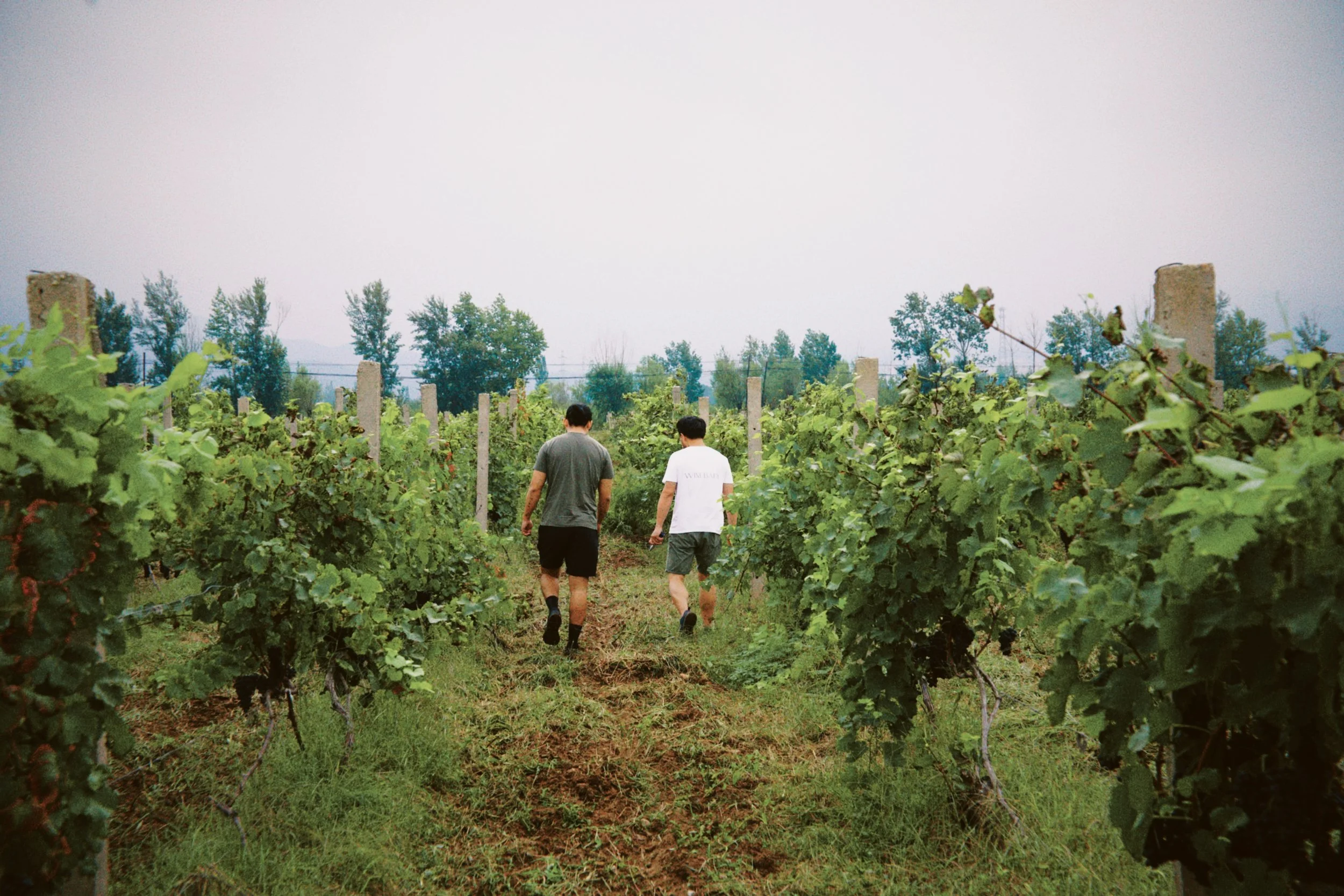
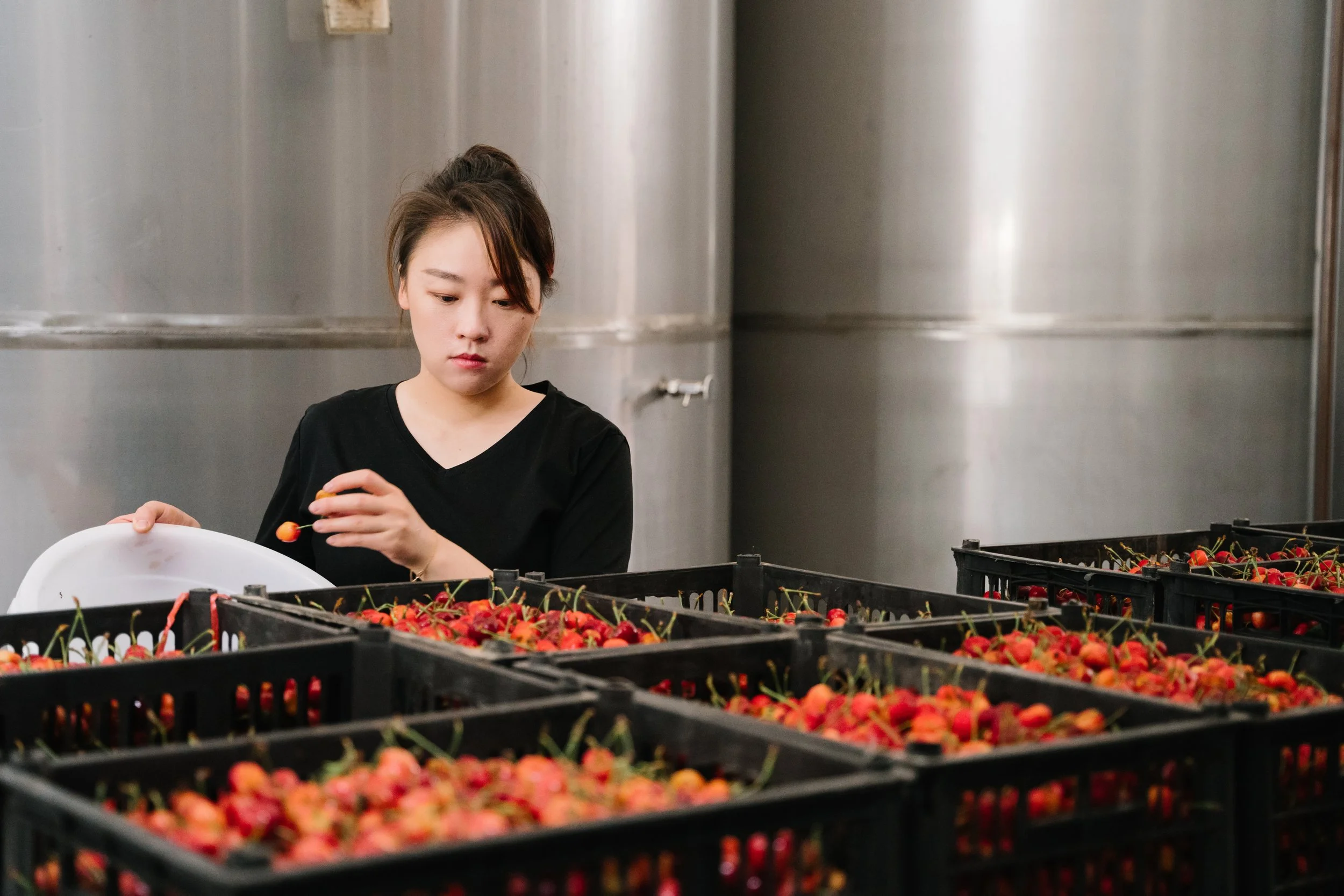
Shofang Hu found early exposure to viticulture through her family’s vineyard in Hebei, planted in 1990. Like many vineyards in the region, grapes were planted to meet increasing demand for wine following the commercial success of COFCO Great Wall Co. Her fascination with viticulture led her to study winemaking in Xi’an, before moving to Australia to complete vintages in South Australia’s McLaren Vale. Whilst studying winemaking at the University of Adelaide, she met her husband-to-be, Levi Lee, in 2016.
Originally from Nanjing, Levi was in Adelaide also studying winemaking and working vintages at Murdoch Hill in the Adelaide Hills, Samuel’s Gorge in McLaren Vale, and Stella Bella in Margaret River. A chance to take over Shofang’s family’s winery in 2019 - coinciding with the couple’s wedding - brought them back to Qinhuangdao where Shofang started making wine under her own name with some of China’s oldest commercial vineyards.
Shofang cherishes her hometown’s terroir and acknowledges the region is better suited for alternative varieties such as Muscat Hamburg, which has a 200-year history in the region. Single-varietal reds are only made in the best years, and instead the focus is on old-vine Muscat Hamburg - with some vines planted in the 1940s.
Whilst many young winemakers have a very high number of cuvées with similar identities, Shofang’s 15 cuvées each carry distinct personalities and intentions. Aromatic, delicate white wines, a skinsy Muscat, an off-dry rosé, and several reds from a sessionable, light Cabernet Sauvignon, a fuller-bodied Shiraz-Viognier, to an Amarone-style Cabernet Sauvignon - made in response the difficult growing conditions - round out the wine offerings. The aforementioned fortified Muscat Hamburg delivers one of China’s only dessert wines. To top it off - a series of ciders made from apples, pears, and cherries endemic to Qinhuangdao.
Having already been exported to the US and Mexico, we are so excited to bring these wines to Australia - Shofang and Levi’s second home .